
Tremendous Gifts
Well thank you, Nate, for having me on this podcast. It is a real honor to be connected with you and the work that you're doing and the concept by you and Dr. Saint about sacred moments because it is of worth for us to keep remembering these times whenever our interactions with somebody else have been incredibly meaningful to us or to them. I often would ask residents to, when they had a patient who did extremely well to say, did you ask them what you did that made that happen? And the answer is no, because you just, you don't think about that. But it's quite common that the patient would remember a single moment on a single visit three months ago, ‘when you said this, Doctor, and it changed my life.’ So I think we're unaware of those particular kinds of things most of the time, but they are beautiful and they're wonderful. And I think it's great that you and Dr. Saint are working together to try to capture these.
The last time I had thought about sacred was on sabbatical in Florence, Italy, when the concept was sacred spaces. And you would go into one church or one museum or whatever and, and you would say this is indeed a sacred space. Something happened here that was quite remarkable and you have to have great respect for it. And so, the fact of sacred spaces threw me back to the moments of my thinking.
And I was taken back to a talk that I gave in 2009 to the Association of Program Directors in Internal Medicine. And what I said to them was the success in my career came from being at the right place and at the right time, but most of all with the right people. And I was so proud of myself for having said that, that sacred moments have to do with place and time and people and I thought I had invented it.
I just decided to look that up yesterday and see and indeed I had. It only had only been previously used two to three hundred BC by Chinese philosophers who spoke about the fact that there were those three concepts about a sacred moment that it had involved in it a place and a time and then a human interaction that would made it, made it wonderful.
So so it wasn't my idea apparently. But I had often said that if you have something really important to say, know that the likelihood is that it's been said before, and that somebody in humanity has had that aha moment well before you did.
So the thought about right place and right time and right people brought me to thinking about two different episodes in my life. Well, there are many, but two episodes related to my work in medical education and improving teaching. And both episodes led me to realize the importance of others who are often wiser than oneself, either in general wiser or at least at the moment for one reason wiser. And both of these occurrences actually were quite influential in my career. So I'm not going to speak about patients as much as about teachers and wives.
Now, the relationship between people, uh teachers and students, I've often referred to in the same manner as the relationship between patients and physicians and care providers. That the connection between the teacher and the student and the impact on their lives is so powerful and is so often forgotten and not taken advantage of. Often when we do our seminars in clinical teaching, when we do them in person and people are sharing, I tell them that they must respect the sharing about teaching and learning in the same manner that they respect the interactions of physicians and patients. Because there's heartfelt issues. So what are these episodes that I'm going to share with you?
Well, the first one occurred in 1976, during the time that I was a fellow in general internal medicine at Stanford, with my mentors, Dr. Dan Fetterman, who was there as the chairman of medicine at the time, and Dr. Harold Sox, who was my division chief. Both of them had tremendous impacts on me.
The first was Dr. Daniel Fetterman. As a chairman of medicine, because he and Dr. Sox started the first fellowship in general internal medicine at Stanford in 1976. There were eight fellows in the country, two at Stanford and two at three other institutions. Dr. Fetterman was so self-effacing and so gracious as a teacher that he would have the two fellows meet with him every week after grand rounds and talk about what was going on in his life for that week. So we got direct insight into the life of a chairman. And he would not only talk about it, but he would ask advice and he would share, and his respect was just inordinate.
But one day at the end of one of those meetings, as we were leaving his, we left his office, we left his office and I remember him stopping me outside and saying to me, ‘You know, Kelley, I think that you really are interested in teaching and it might be the right career for you. But in order to find out, what I want you to do is I will support you if you'll choose four or five institutions in the country that you think are doing great work in medical education, and you go visit them and you find out whether or not it resonates with you. And then when you come back, we'll talk about whether or not this is what you should do in your career.’ Well, what a moment. I’ve found no other examples similar to this in anybody's life in academic medicine. I've no, have no other examples where somebody said, I think you're confused. The best thing to do is to go find colleagues like you outside of this institution and talk to them.
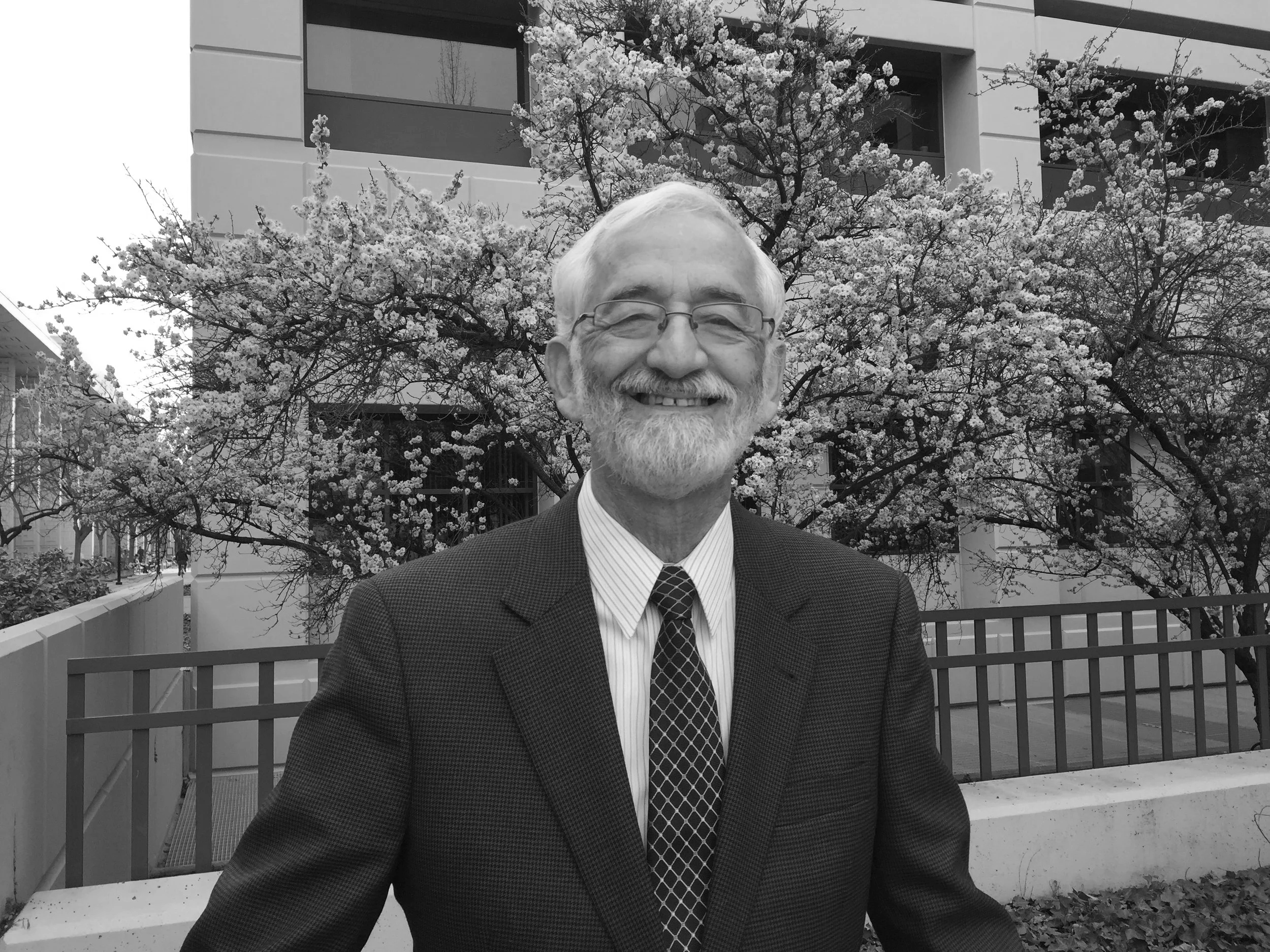
Kelley Skeff, MD, PhD, MACP
Well, it was a momentous trip. I was, I went to Michigan State University and from there to the AAMC in Washington DC and from there to the University of North Carolina and then to the University of Illinois in Chicago and then back home. And that circle was one, was very powerful because each of the educators – now I'm speaking both about medical educators and professional non-physician educators – each of those educators showed themselves to be so completely caring and devoted to helping other people that, even without the kudos that physicians get s an automatic aspect of their role, these folks called professional educators gave of themselves without reward, and common even with derogation, where people would be derogatory toward them. Who are they? What are they doing in our field? What is it? And yet they remained persistent.
So I came away from that trip with not only a commitment to realize that there might be some role for me to try to merge these two areas – the field of education and the field of medicine, could I become somewhat of an intermediary between those two? But it also great me gave me great respect for those people who are dedicated in the helping profession to be a teacher in the same manner as those that are dedicated to be a care provider as a physician. So that was the first episode as he sent me off to learn about other people who I respect.
For the other mentor in my fellowship and that's Dr. Harold Sox. He stopped me after clinic in the VA. I was, as a fellow, we had a clinic every week. We had a clinic both at Stanford and at the VA so we could see both groups of patients. And he stopped me because he went to the VA and after clinic, he said, ‘Kelly, you really want to go into academic medicine?’ I said ‘Yeah, I believe it's the place for me.’ And he said, ‘Well, you need to get a PhD.’ And I thought, what are we talking about? I was already in the throes of the inaccuracies of self-assessment, because I felt I was already pretty good, right? I was quite good as a teacher. I could give more people advice about it. There was not a whole lot more to learn. That was in my in one of my high moments and, one of my moments of, bad, of ignorance.
But he knew better and he said, ‘You have enthusiasm, but you don't know the science of the field you're going into. And you better study the science.’ And as a result of that, with a lot of other connections including the trip that I took, because that preceded the trip, it ended up with me communicating with people on that trip about getting the PhD. And then I ended up walking across the street to Stanford and spending the time. But were it not for that moment where I was assigned, assigned, a requirement by a mentor to do something that I would never have chosen on my own. Never. I wouldn't be where I am today.
The third moment I want to be relates to my wife, who happened to be with me on a trip that I was giving, that I was taking as a fellow, where I had been invited to speak at several Eastern institutions. And I really felt that we were onto something with the work that we were doing. And that we saw the power of videotape and the power of watching other people and learning from them on video, and the power of discussing somebody else's video and seeing what they did and what they were thinking, et cetera. At that time, I was videotaping Stanford faculty. And they were quite gracious and quite open to being taped and reviewed. And after I would tape them, I would literally go over the tape with them to see what they were thinking. And I was very taken by many of them about their dedication, their caring, the amount that they worried about the students, the fact that they were going home at night worried about this student or that student. And there were parts of them that I didn't know till I watched their videotape with them.
And so I thought, well, maybe I could take these tapes around the country, and we'll see what people see in these tapes and we'll have these aha moments of the discovery of who these folks are and how wonderful they are. So I took one of my tapes that was exemplary. Exemplary in its humaneness, exemplary in the courage that the teacher had to talk about death and dying. And I showed the video at the institution, and the members of the audience, other physicians, began to criticize the teacher immediately. What right does he have to talk about this? Who is he? Where is he coming from? What is his background? I was showing an exemplary educational video, and the teacher was getting critiqued with no positive being seen.
Well, that was an aha moment because I went back and I said to my wife, I don't know if my work's gonna work. These people didn't go for it. And she said, ‘Don't you realize that their response to the video is the reason you're doing your work? Your work is to help people realize that they in fact cannot see the good when it's in front of them. Your work is to try to have them develop a way to see what they didn't see.’ So she reawakened me to the fact, and now I use it a lot, that a time when you have a block in your career, a place where your hypothesized success is impeded, that what you really have is a new piece of data about the subjects as much as about the method. And that made me realize that in fact there was an even greater need for what we were going to do than I had before. And it gave me even greater fervor.
So these three episodes, in retrospect, were sacred. At the moment, I don't know if I certainly did not recognize that it was a sacred moment when I was being sent for my PhD. In retrospect, it was a tremendous gift. A tremendous gift to meet other people from Dan Fetterman. A tremendous gift to meet a group of experts in a field that I didn't know existed and then, in my wife to recognize that what I was doing was going to have impediments, but that I had to see them as a reason for being rather than a reason for stopping.
Thank you so much for letting me share. I hope that whoever hears this can replicate some of those moments for the people that they get a chance to touch.