
Musical Rounds
By Melanie Ambler, MD
Aspiring physician musician
The scent of tahini almond chocolate chip cookies filled the windowless basement room, home of the Stanford palliative care team. Everyone worked quietly, preparing patient presentations for rounds and conjuring game plans for the day while I unpacked my cello (fondly known as Shelby).
“It’s 9am everyone, gather around for reflection rounds.”
“Wait, Emily, it’s 8:58. Give me two minutes.”
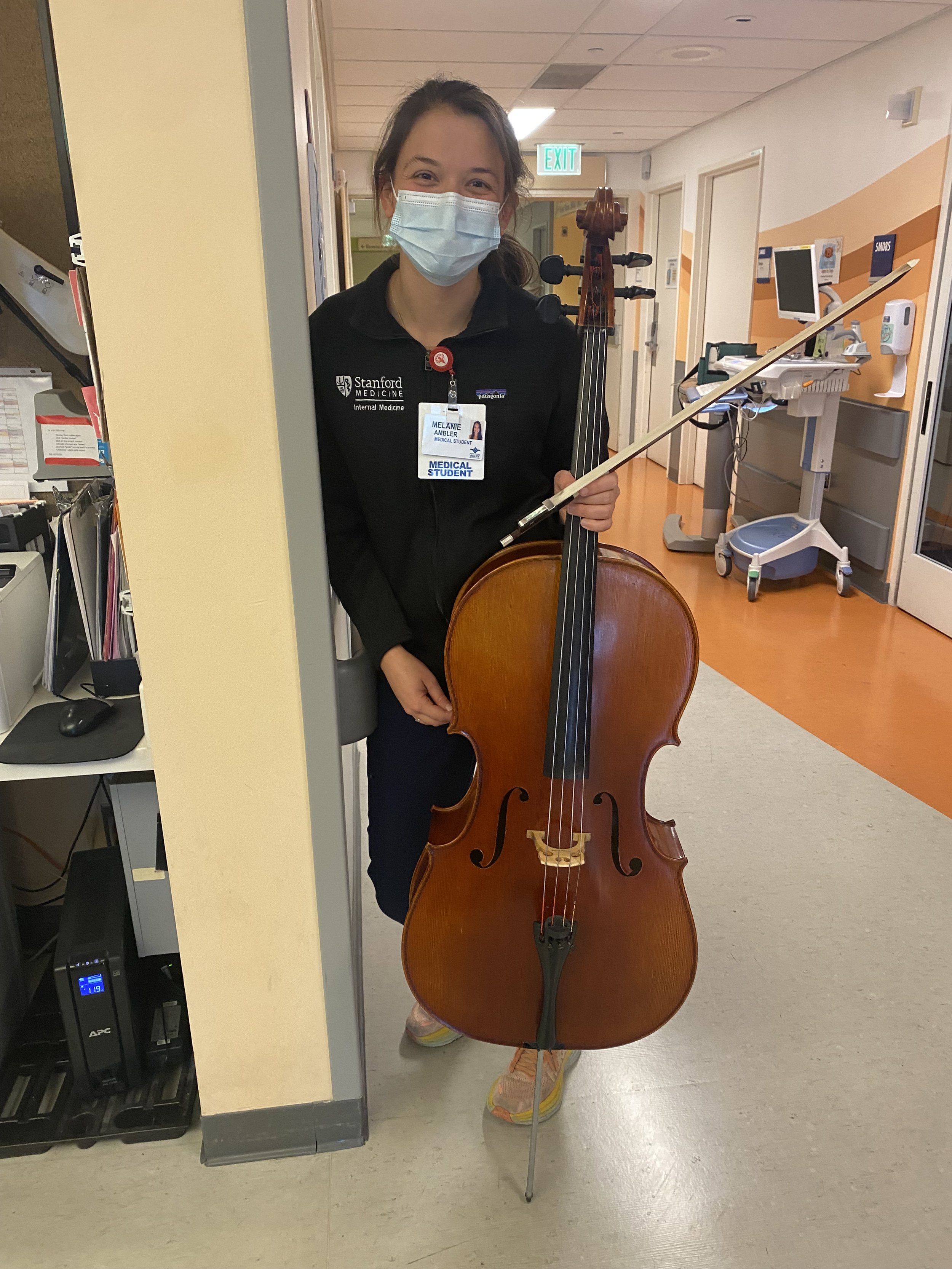
Melanie Ambler, MD
We all chuckled and waited another two minutes. Emily then introduced the group as a time to log off computers, turn our chairs towards the center of the room, and be present with one another. It was only my second day with this team, so I introduced myself and the goals for my passion project and research study entitled Musical Rounds. I hoped to recruit patients receiving palliative care and their family members to a music legacy building intervention aimed at improving the stress, anxiety, pain and discomfort in those hospitalized with a serious illness. I would interview them about things meaningful from their lives, then accompany those stories with an improvised soundtrack on my cello Shelby. The session with the patient and family was recorded, then sent back to them as a legacy offering.
After introducing the Musical Rounds study, I told the team, “I would love to create soundtracks for you this morning and start reflection rounds by better understanding your team. Tell me about your culture, what it is like working together and supporting each other.”
“Well, that’s a big question!”
No one spoke for a few seconds. This group was comfortable with silence.
Then, a chaplain shared about the support that is present on the team. About the fact that palliative care is not sad, it is filled with love and beauty. That it is a privilege to work with patients and families and to experience such deep care for another human being. That’s what makes her job so fulfilling and meaningful. She gets a glimpse of those moments.
“Can I play you something resembling supportive love?”
“By all means.”
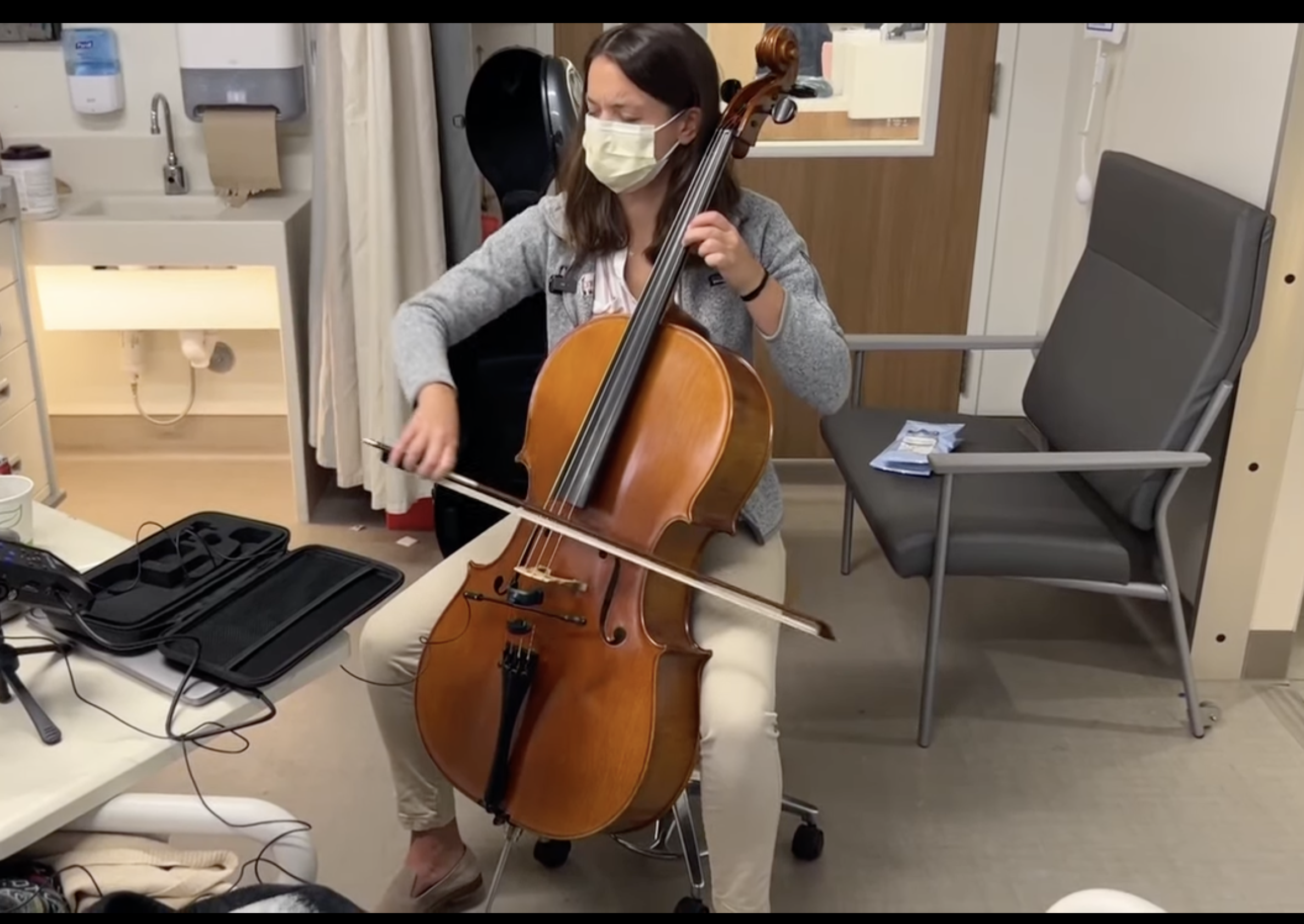
I started with a low warm D, letting the resonance sink into the room. Then the melody wandered higher, exploring the smooth upper register. It was full of weight and beauty all at once. When I opened my eyes after the brief improvisation, the group took a collective breath. Some wiped tears from their eyes. There was so much unsaid.
A team member took a minute to speak. When she did, the tone shifted. “Can I go dark for a second?” She described that she believes each and every one of us in the room fell into this line of work due to some experience with tragedy in our own lives. Each person in this room took whatever that experience was and molded it into a resilient presence with a desire to be there for others during similar times. She argued that there's a prerequisite depth of perspective needed to do this job well, often coming from our own trauma.
Interpreting what she shared with her words into a musical reflection was my most active form of listening. Her ideas, body language, and emotion translated to a note, then a rhythm, then a melody in my head. I started tapping my foot as she spoke. My hand wandered silently over the fingerboard, tracing out ideas for where to continue the conversation.
The music fell to something accented and harsh. Tragic. Slowly, the dissonance resolved, and a tonal structure returned. But there was always a hint of the tragedy. Sometimes the melody flowed, then was suddenly interrupted. A vestige of the past, of that dissonance that grounded everyone in their work. It was powerful. It was fluid. And afterwards, we sat for the longest silence of the meeting thus far. The air was heavy. Little did I know that a few months later, I’d experience a sudden personal loss that would push me even deeper into this line of work. I now see what that attending meant.
We then collectively heard about the trust that was required to be on this team, the fact that this room in the basement of the hospital is a haven for these providers. A place they find solace, support, community. One person mentioned that she’s been here for 8 years and that a young resident asked her how she’s stayed in palliative care for so long.
“It’s because I absolutely love what I do.”
Another chimed in that this job isn’t sad all the time. There are sometimes moments of joy, or unexpected laughter while a patient signs a DNR. There is humor. “Our team is wacky and weird sometimes.” I then jokingly responded with a little pizzicato twang. We all laughed.
I offered to end the musical reflection rounds with Sun Up, one of my favorite pieces. I asked the team to close their eyes and picture a sunrise somewhere in their world. As the piece ended on a high G, I felt a collective sigh of relief. I again opened my eyes. We were all present. No one had turned to look at their computers in the 30-minute session, a miracle in and of itself. 9:30 came around, and it was time for rounds. The switch flipped. Back to work.
For more information about Musical Rounds visit: www.melanieambler.com