
Do You Know What I Mean?
My story took place about six years ago now. It was the summer of 2019, and I had been asked to take part in a sweat lodge. And I had experienced a sweat lodge before and it was incredible in terms of my own ability to connect to myself, to others, and to something greater. And I knew I wanted to do it again and I really saw it as an opportunity for my own sort of healing and growth like my previous experiences in a sweat lodge.
But this one was very different and very unique in the sense that the sweat lodge keeper had invited another member of the sweat lodge to do one of the rounds. So there was four rounds of reflection and sharing and healing. And this round was focused on dreams. So the person facilitating this round had shared a very powerful dream that had happened to him. And that had essentially transformed his life in very concrete ways in terms of the teaching and the guidance that he had received from a dream. And so after sharing the details of his dream, he asked the other members of the sweat lodge to reflect on a dream that they have had and what it means to them and to their life going forward in terms of direction.
So here I am, I'm 39 years old, and I'm brought back right away to a dream that I had when I was 20 years old. And I was a university student living in Toronto doing my studies in human biology and bioethics and, you know, applying to medical school. And I was living with a roommate at the time in a basement apartment. And I had never had such a scary, terrifying, beyond words in terms of what this dream was like for me. And it sat with me for many years.
And what happened in the dream was I felt and saw this very dark, like black, fuzzy entity, almost cloud-like, moving towards me. But what it entailed or what it reflected was this very cold, evil, unknown, again, dark sort of force, like energy that I had never knew existed. I had never experienced or saw anything like it. It was completely foreign to me, and it was moving or coming towards me. And it was so terrifying that I actually woke up, woke up in terms of like standing up out of bed, screaming on the top of my lungs. And I have never had, you know, anything like this before in my life in terms of a night terror. Sure, I've had sort of, you know, nightmares kind of once in a while, but nothing, nothing like this. And I woke up my roommate, I woke up the landlord, you know, above us, and I was screaming and just total terror, total fright. It just felt completely different than any other sort of dream or visual or, you know, physical experience I'd ever had.
And I didn't know what to do with it. You know, obviously I calmed myself down enough to be able to sort of go back to sleep and, you know, get back to kind of my day-to-day life. But that dream sat with me and would come to me every once in a while in my life. And I just reflected on it, not really understanding why, why did I have that dream? What was the meaning of that?
And so as I brought that vision and, you know, the feeling, the physical feeling and the emotion that I had during that dream back up in that sweat lodge, I just sat with it. I didn't actually share. We did have the opportunity to say out loud, you know, to the other people in the sweat lodge what dream or what learning we had, but I didn't. I just sat with it myself. And I didn't experience fear. I just was observing it. I was just sitting with it, almost like holding it, like you would hold, you know, a baby or a child with compassion, I just wanted to hold it, I just wanted to understand it. And as I was doing that, I re-visualized this dark, cold entity. I began to see this very small, fuzzy light in the center of it begin to grow. And so I just allowed that to unfold in my mind as I sat in the sweat lodge. Being in a place of presence, not trying to sort of label or categorize or analyze it, just allowing it to be.
And so that was on the Saturday night and the sweat lodge, you know, the entire ceremony is, it takes several hours and when you're finished and you you're physically and emotionally exhausted because it's a very intense experience in many ways. And we were guided by the sweat lodge keeper, you know, to reflect on the learnings and the experiences over the next few days and to know that you may feel somewhat vulnerable or fragile based on the experience of the sweat lodge, but just to be kind and just to sit with yourself and what emanated in terms of insights or healing or growth.
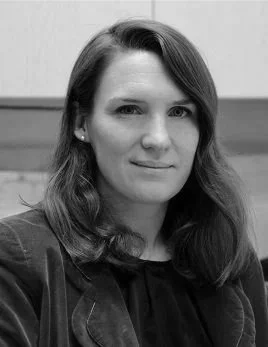
Arlene MacDougall, MD, MSc, FRCPC
So I did that. And over the next day or so, I began to realize that what this dream meant to me was that, unknowing to me at 20, you know, and still pretty naive in terms of life experience, I had not really been faced yet with significant challenge, with significant loss, betrayal, suffering, disappointment. You know, some of these really big events that occur in pretty much every human life at some point or another, but that cause deep pain, but also deep confusion and deep fear. And I had not really experienced that yet at 20. But then at 39, you know, through my career and through my personal life, I had. And I realized that that dark entity was something that I couldn't run away from. I couldn't pretend it wasn't gonna happen. It did show up in my life. It was pain, it was suffering, it was confusion, it was deceit, it was being let down. I also learned though that from those very difficult experiences that I was able to grow deep strength, wisdom, authenticity, kindness, and love for myself as well as more so for others, and that through that darkness and those dark experiences, light was able to develop and grow and balance the darkness and respond to it and counter it.
So on that Monday, so two days following the sweat lodge, I was working as a psychiatrist at a service, at a clinic, that supports Indigenous peoples. And I'd been doing consulting psychiatry there. So most of my work is really meeting people once and doing an assessment and providing diagnosis and recommendations to themselves and to their primary care providers. And that Monday afternoon, after the sweat lodge, I was meeting with a middle-aged woman who had chronic depression and anxiety and a lot of trauma, including intergenerational trauma, but a lot of trauma that had not been fully addressed or fully processed and treated.
As I was doing my assessment though, it became clear she was disclosing to me that she was actively suicidal. And so I was very quickly adjusting as a clinician from being in an assessment mode to being in an intervention mode and having to develop some very practical, concrete interventions and strategies to shift from acute suicidality and reduce risk.
So we began to talk, we began to switch from, you know, exploring her symptoms and exploring her, you know, the impact on her life to really exploring who she is, and what matters to her, and what meaning, meaning life has for her, and what her purpose is, despite all of the challenges, mental health and otherwise, that she was experiencing. She began to talk about how she has a recurring vision of this very dark cloud with a little shining light in the center that grows. And as she was saying this to me, I was of course imagining my own dream. And she looks at me and says, do you know what I mean? And I said, yes, I do know what you mean. What does it mean to you? And she began to share that she has a belief that she was put on this planet for a reason and that she was more than just, you know, the trauma or what has been done to her, and that she has hope that she will get better and that there's something, she doesn't know what it is, but there's something good that will come from her pain and from her life.
And I just nodded my head and allowed her to just continuously sort of express what that meant to her. And she shifted from being acutely suicidal to wanting to look at ways to make that happen for her. How to really move her story from that of being depressed and anxious and one of trauma to one of strength, one of hope, one of resilience and making something out of this.
So as we finished the assessment, she was very clear that she wasn't actively suicidal anymore and that she wanted to work with me and with her primary care team into a place of healing and a place of growth. And so we parted ways. I did not see her in follow-up. I did hear from her primary care team that she was stable and making, you know, improvements with different ways of intervening. You know, that interaction just for me was so special in the sense that I knew exactly what she meant and I didn't have to tell her, I didn't have to tell her what my understanding was, but she knew and I knew that we knew exactly what each other meant. And it was like we were no longer, you know, psychiatrist and patient for that, that moment. It was just connecting at this very profound level and it was a connection, obviously, that was mutually very meaningful and beneficial.